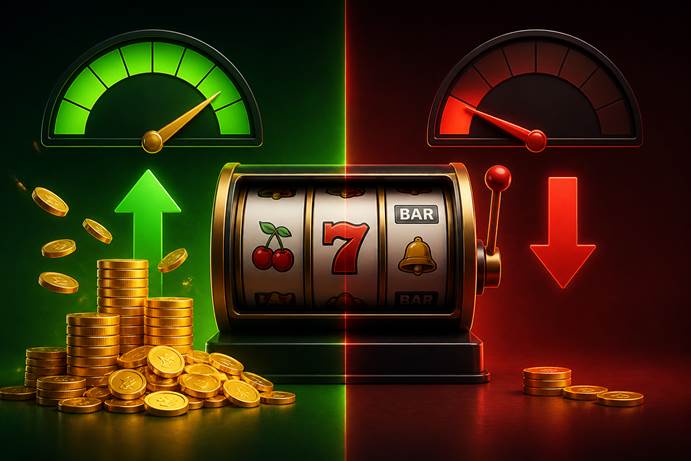
How Esports Themes Are Entering Online Casino Games

Esports themes are entering online casino games with increasing frequency, yet many players assume that overlaying tournament graphics onto a slot machine counts as meaningful integration. For another perspective on the money side of the topic, casino bonus may be useful. For those unfamiliar with how modern casino environments function online, reviewing an established helps clarify what genuine crossover looks like. The difference matters because surface-level decoration can feel exciting without actually changing how chance operates beneath the spectacle.

How Like Works

Developers are weaving esports visuals and pacing into casino games through more than cosmetic changes. Tournament brackets now structure bonus rounds, countdown timers mirror match schedules, and leaderboard mechanics replace static paylines. This shift feels less like a skin swap and more like a structural rethink, where the rhythm of competitive gaming informs when rewards appear and how anticipation builds.

However, the allure of familiar esports branding can obscure a persistent misunderstanding. Players often expect strategic decision-making to influence outcomes, especially when tournament scenes play during spins. The reality remains that most casino games rely on randomized number generators, meaning a player’s knowledge of esports strategy rarely affects results. The excitement comes from presentation, not manipulation of odds.

How Casino Experience Connects With Games

Sound design reinforces this psychological bridge between esports and casino games. Crowd reactions, commentary snippets, and victory fanfares trigger the same emotional responses seen in live tournaments. These cues condition players to feel the weight of competition even within games of pure chance. The casino industry recognizes this power, using familiar audio cues to sustain engagement longer than traditional slot soundtracks.

Responsible operators are learning to balance spectacle with transparency. Clear explanations of how randomness works, visible return-to-player percentages, and limits on session length help maintain trust. When esports themes enhance entertainment without hiding mechanics, players enjoy both the thrill of competition and the honesty of chance.

  • However, the allure of familiar esports branding can obscure a persistent misunderstanding
  • Players often expect strategic decision-making to influence outcomes, especially when tournament scenes play during spins
  • The reality remains that most casino games rely on randomized number generators, meaning a player’s knowledge of esports strategy rarely affects results
  • Clear explanations of how randomness works, visible return-to-player percentages, and limits on session length help maintain trust

Understanding Successful

The most successful future casino titles will probably be those that respect both traditions. They offer the drama of competitive storytelling alongside the unpredictability of gambling, without blurring the lines so much that players lose sight of what they are actually playing. This balanced approach suggests esports themes will continue evolving beyond simple aesthetic borrowing toward more integrated forms of digital entertainment.


Çevrimiçi Kumarhanelerin Yükselişi ve Geleceği

Son yıllarda, çevrimiçi kumarhaneler, dünya genelinde büyük bir popülarite kazanmıştır. 2023 yılı itibarıyla, çevrimiçi kumar pazarının 100 milyar doları aşması beklenmektedir. Bu büyüme, özellikle genç neslin dijital platformlara olan ilgisiyle doğrudan ilişkilidir. Çevrimiçi kumarhaneler, oyunculara ev konforunda oyun oynama imkanı sunarak, geleneksel kumarhanelere alternatif oluşturmuştur.

Özellikle, Bet365, bu alandaki en büyük oyunculardan biridir. Şirket, 2022 yılında, yeni bir mobil uygulama geliştirerek kullanıcı deneyimini artırmayı hedeflemiştir. Bet365’in CEO’su Denise Coates, şirketin büyüme stratejileri hakkında daha fazla bilgi almak için Twitter profilini ziyaret edebilirsiniz.

Çevrimiçi kumarhaneler, oyunculara çeşitli oyun seçenekleri sunmaktadır. Slot makineleri, rulet ve blackjack gibi klasik oyunların yanı sıra, canlı krupiyelerle oynanan oyunlar da popülerlik kazanmaktadır. Bu oyunlar, yüksek kaliteli video akışı ve etkileşimli özelliklerle donatılmıştır. Daha fazla bilgi için New York Times makalesini inceleyebilirsiniz.

Çevrimiçi kumarhanelerde başarılı olmak için bazı ipuçları bulunmaktadır. Öncelikle, oyun kurallarını iyi anlamak önemlidir. Ayrıca, bütçe belirlemek ve bu bütçeye sadık kalmak, kayıpları minimize etmek için kritik bir stratejidir. Oyuncular, oyun sırasında duygusal kararlar almaktan kaçınmalı ve soğukkanlılıklarını korumalıdır. Bu tür stratejiler, oyuncuların daha iyi bir deneyim yaşamasını sağlamaktadır. Daha fazla bilgi için alev casino.

Sonuç olarak, çevrimiçi kumarhaneler, teknolojinin gelişimiyle birlikte daha da popüler hale gelmektedir. Ancak, her zaman dikkatli olmak ve güvenilir platformları tercih etmek önemlidir. Oyuncular, lisanslı ve güvenilir siteleri seçerek, daha güvenli bir oyun deneyimi yaşayabilirler.

Horror Themes in Online Casino Slots

The cultural obsession with terrifying narratives and grotesque folklore finds a surprisingly robust home in the virtual betting world, frequently driving enthusiasts to examine a trusted online casino to explore cinematic dread. For a related reference on this point, mad casino can add useful context. Many observers assume that these macabre aesthetics fundamentally alter the underlying probability of winning, creating a belief that slots wrapped in blood, ghosts, or zombies behave differently than titles with traditional fruit or jewel symbols. However, the external artwork, eerie audio cues, and terrifying character models serve purely aesthetic functions rather than mechanical ones. A particular casino operator might host hundreds of diverse titles, yet every single reel rotation remains strictly tethered to a certified random number generator.

Tools and Practical Use

Another prevalent assumption suggests that higher volatility is inherently tied to dark visual motifs. People often encounter a horror-themed slot inside a crowded casino lobby and infer that the presence of vampires or gothic castles implies a faster rate of financial depletion or larger jackpot payouts. In practice, aesthetic terror and financial volatility are completely independent variables chosen by the software studio. A bright, cheerful cartoon slot can possess the exact same mathematical variance and return-to-player percentage as a grim, blood-soaked horror release sitting right next to it on the casino server.

Area What to know
Context Another prevalent assumption suggests that higher volatility is inherently tied to dark visual motifs.
Consideration Players frequently convince themselves that extended losing streaks during a midnight session on a horror slot are somehow influenced by the spooky time of day or the heavy atmosphere of the game.
Practical takeaway The assumption that high-end graphics and cinematic cutscenes imply better payout odds also trips up many casual participants.

Players frequently convince themselves that extended losing streaks during a midnight session on a horror slot are somehow influenced by the spooky time of day or the heavy atmosphere of the game. This psychological projection stems from confirmation bias, where human memory naturally clings to the eerie coincidence of a jump scare coinciding with an unfavorable spin. Every physical or digital casino environment relies on cold mathematics, meaning that the grim reaper or phantom grinning from the monitor possesses no hidden malice or supernatural control over the outcome of your wagers.

  • Another prevalent assumption suggests that higher volatility is inherently tied to dark visual motifs
  • People often encounter a horror-themed slot inside a crowded casino lobby and infer that the presence of vampires or gothic castles implies a faster rate of financial depletion or larger
  • A bright, cheerful cartoon slot can possess the exact same mathematical variance and return-to-player percentage as a grim, blood-soaked horror release sitting right next to it on the
  • Every physical or digital casino environment relies on cold mathematics, meaning that the grim reaper or phantom grinning from the monitor possesses no hidden malice or supernatural control
  • A simpler slot with basic graphics located within the same online casino library might offer superior statistical fairness compared to a heavily branded, movie-tie-in horror game that

Account Access and Use

The assumption that high-end graphics and cinematic cutscenes imply better payout odds also trips up many casual participants. Software developers invest heavily in atmospheric soundscapes, pulsing bass notes, and unsettling visual effects to keep the user engaged, yet these production values do not correlate with generosity. A simpler slot with basic graphics located within the same online casino library might offer superior statistical fairness compared to a heavily branded, movie-tie-in horror game that requires extra overhead costs to license.

What Matters in Practice

Recognizing how these design choices work helps strip away the illusions often generated by effective art direction. By separating the chilling ambiance from the raw mechanics of the reels, participants can engage with horror slots in a grounded manner. The ultimate responsibility rests with the individual to manage time and funds sensibly while exploring the dark corridors of any modern casino.

Cybersecurity Managed Services Ey В Україні

A multi-layered, integrated defence technique is important for enterprise resilience. Cybersecurity is the process of defending networks, techniques, functions and digital assets from unauthorized access, cyberattacks, malware and data breaches. It ensures the confidentiality, integrity and availability (CIA) of information whereas supporting secure and sustainable digital infrastructure. The zero-trust security model prescribes creating micro-segments round knowledge wherever it may be. Usually missed, cell units similar to tablets and smartphones have access to corporate information, exposing companies to threats from malicious apps, zero-day, phishing, and IM (Instant Messaging) attacks. Cell security prevents these assaults and secures the operating techniques and units from rooting and jailbreaking.

Why Is Cybersecurity So Important?

Protecting in opposition to the fashionable cyber menace panorama requires Gen V cyber safety options. Defining and documenting cybersecurity insurance policies and practices throughout the complete group. Proper governance procedures allow organizations to raised track and implement their safety controls. Other important elements of cybersecurity governance embody classifying datasets primarily based on their sensitivity and performing compliance audits to make sure companies adhere to the related regulations. Managed Safety Companies (MSS) is a form of cybersecurity delivered and operated by a third-party supplier.

post-quantum cryptography blockchain

What Is Cyber Security?

Upon completion of the Google Cybersecurity Certificates, you’ll gain access to an exclusive job platform the place you can simply apply to opportunities from employers with open jobs. Cyberattacks are malicious makes an attempt to access or injury a pc or community system. Cyberattacks can lead to the loss of cash or the theft of non-public, financial and medical data. Strong cybersecurity practices across the organization contribute to operational excellence. Whereas ransomware used to only encrypt files, it now will steal data to extort the sufferer and their prospects in double and triple extortion attacks.

  • Security Info and Occasion Administration (SIEM) instruments allow real-time menace detection.
  • Penetration testing identifies vulnerabilities, whereas security insurance policies and training instill finest practices and consciousness.
  • Kamyck stated security specialists typically work with different info technology (IT) professionals to ensure a company’s techniques are safe.
  • Figuring Out, categorizing, and prioritizing potential risks in an enterprise network.

As such, cloud security is normally a seamless extension of an organisation’s network security. At Present, businesses function across cloud platforms, distant endpoints, and third-party supply chains. A single weak point in software program, access controls, or human behaviour can result in a serious breach. This makes understanding the importance of cybersecurity a business-critical precedence.

public-key cryptography

Information Safety Analyst Rankings (us Information & World Report)

Cybersecurity careers are complex and positions can be found in most industries—from small nonprofit organizations to large multinational firms. Infrastructure security describes the bodily and cyber methods which might be so crucial to society that their incapacity would have a debilitating impact on our bodily, financial, or public well being and security. Based in 1932, and on-line since 1995, we’ve helped countless college students reach their objectives with flexible, career-focused programs. Our 300-acre campus in Manchester, NH is house to over 3,000 students, and we serve over one hundred thirty five,000 students on-line. Visit our about SNHU page to learn more about our mission, accreditations, leadership group, nationwide recognitions and awards. If you’re questioning tips on how to get into cybersecurity, you may need a combination of credentials and experience.

bitcoin quantum cryptography security

IoT gadgets range from sensors in industrial tools to smart thermostats in properties. Plus, since they often have restricted safety capabilities, they’re weak entry points for cybercriminals to take benefit of. Zero belief is a contemporary cyber safety mannequin that assumes no consumer or system, whether or not inside or exterior the community, is mechanically trustworthy by default.

An Introduction To Cybersecurity

Information from Examine Point’s 2026 Cyber Safety Report reveals that organizations confronted an average of 1,968 cyber attacks per week in 2025, an 18% year‑over‑year improve, continuing https://ageofconsent.us/terms-of-use/ the sharp escalation seen lately. This rise is driven by expanding digital footprints that provide attackers with extra uncovered infrastructure to focus on, alongside the speedy evolution of a extremely sophisticated and AI‑enabled cybercrime ecosystem. The rising volume and class of cyber attackers and assault techniques compound the problem even further.

With new expertise, from self-driving vehicles to internet-enabled home safety methods, the dangers of cybercrime become much more severe. It is a core model in cybersecurity used to identify vulnerabilities and design effective safety techniques and solutions. They help safeguard customer knowledge and proprietary data, detecting and stopping unauthorised makes an attempt to share or extract it. For organisations where inside groups are stretched, managed services fill the gap.

Some ransomware teams additionally threaten or make use of Distributed Denial of Service (DDoS) attacks to incentivize victims to fulfill ransom calls for. Superior and multi-layered community risk prevention applied sciences embody IPS (Intrusion Prevention System), NGAV (Next-Gen Antivirus), Sandboxing, and CDR (Content Disarm and Reconstruction). Additionally necessary are network analytics, threat searching, and automated SOAR (Security Orchestration and Response) applied sciences.

Behind the Scenes of Software Releases

Bringing a fresh title to the market requires far more than basic creative design, and you can explore broader industry context through this for additional perspective. A related resource such as casino en ligne france legal can help frame the discussion. Software studios that supply entertainment software to a physical casino or an online casino must coordinate numerous technical and artistic disciplines long before public availability. The creation cycle begins with conceptual art and mathematical modeling, where developers determine volatility, return-to-player percentages, and core mechanics. Once the foundational math receives approval, programmers write the core code while artists build the visual assets that define the experience.

Metrics and Performance: Part 2

As development progresses, internal testing teams examine every aspect of the software to eliminate defects and ensure stable performance across various hardware configurations. After internal checks conclude, independent testing laboratories evaluate the source code for fairness and compliance. Regulatory approval is necessary before any regulated casino can legally offer the software to the public. This verification phase guarantees that random number generators operate correctly and that players receive fair outcomes during every session.

Area What to know
Context As development progresses, internal testing teams examine every aspect of the software to eliminate defects and ensure stable performance across various hardware configurations.
Consideration Following regulatory clearance, the distribution phase starts, involving coordination between the software studio and operators.
Practical takeaway Marketing departments simultaneously prepare promotional campaigns to generate interest among operators and players.

Following regulatory clearance, the distribution phase starts, involving coordination between the software studio and operators. A modern online casino or traditional land-based casino must integrate the new software into its existing server infrastructure and lobby architecture. Technical staff run staging deployments to verify that data transmission, bet tracking, and account balances synchronize correctly between the vendor servers and the casino environment. This technical bridge ensures uninterrupted service when peak traffic hits.

  • Regulatory approval is necessary before any regulated casino can legally offer the software to the public
  • Following regulatory clearance, the distribution phase starts, involving coordination between the software studio and operators
  • A modern online casino or traditional land-based casino must integrate the new software into its existing server infrastructure and lobby architecture
  • They distribute promotional materials, demonstration versions, and press releases detailing the mechanics and unique selling propositions of the title
  • Executives coordinate promotional agreements, such as free spin allocations or exclusive timed windows, giving a specific casino a competitive edge over rivals

Strategy and Reach

Marketing departments simultaneously prepare promotional campaigns to generate interest among operators and players. They distribute promotional materials, demonstration versions, and press releases detailing the mechanics and unique selling propositions of the title. Executives coordinate promotional agreements, such as free spin allocations or exclusive timed windows, giving a specific casino a competitive edge over rivals. These promotional structures require careful alignment with local advertising standards and bonus policies.

Metrics and Performance

On the official launch day, the software goes live across the distribution network, transitioning from testing servers to active production environments. Operations teams monitor system performance closely during the initial hours to catch any unforeseen bugs or server bottlenecks immediately. Customer support staff receive specialized training to handle inquiries regarding the new rules, paytables, or interface elements. Ultimately, a successful debut establishes a strong foundation for long-term player interest within the competitive casino industry.

How Credit Card Payments Work at Online Casinos

A casino’s payment screen may look reassuringly ordinary, but the card details entered there rarely travel straight into the casino’s bank account. Instead, a credit card payment passes through several intermediaries, each with a different role. That chain explains why an approved transaction can take longer to clear than a normal retail purchase, why a displayed balance is not the same as settled cash, and why some cards work at one casino but not another.

The process usually begins when the casino asks its payment processor to seek authorization for a specified amount. The processor forwards that request through the card network to the bank that issued the card. The issuer checks available credit, account status, spending limits, security signals and whether gambling transactions are permitted under its policies. An approval means the issuer is willing to extend credit; it does not mean the casino has already received the money. The transaction is settled later, normally through the processor and the merchant-acquiring bank.

A useful distinction is between the player’s casino balance and the debt on the card statement. A credited casino account represents funds made available by the operator, while the corresponding card charge remains subject to the issuer’s billing cycle. Interest, foreign-exchange charges or cash-advance treatment may apply depending on the card agreement, although terms differ between issuers. Withdrawals also follow separate rules: some return to the original card, while others use a bank account or e-wallet, and a return to the card does not necessarily restore available credit immediately.

That separation is important when reading details about gambling payments. A clear reference such as can help distinguish authorization from settlement and a promotional balance from money that has actually cleared. In an online casino interface, labels such as “deposit,” “balance” and “withdrawal” often describe internal account entries rather than stages in a conventional bank transfer. For additional context, sweet-bonanza https://www.bonanza-slot-sweet.ink/ can be considered alongside this overview. The terminology is operational shorthand, not a complete account of the financial chain.

Card acceptance is shaped as much by risk controls as by technical capacity. Casinos and their processors may classify gambling as a higher-risk merchant category, prompting closer review. An issuer can decline the payment, restrict online gambling or ask the account holder to verify a transaction. Location-based restrictions may also apply because gambling laws and licensing rules differ between jurisdictions. Approval at checkout does not guarantee that the payment will ultimately settle, so the account entries made by a casino and the charges shown by a card issuer may not always match.

The payment method itself says nothing about the fairness of the games. Outcomes at a licensed casino are normally determined by a random number generator, while a stated return to player describes a game’s theoretical payout over a large volume of play. Independent testing or auditing may examine those systems, but that work is separate from card processing. Still, accurate transaction records matter operationally: they help the casino reconcile accepted payments, identify unusual activity and resolve accounting discrepancies.

Security measures can reduce exposure without removing the underlying financial obligations. Tokenization may replace card details with a temporary identifier during processing, while additional cardholder verification can confirm the account holder. Neither feature guarantees anonymity, prevents an issuer from blocking a charge or guarantees a successful dispute. Reversing a gambling payment can also be harder than returning an ordinary online purchase, especially when the service has already supplied play credits or withdrawn funds. The restrained conclusion is simple: credit card funding combines ordinary card-network mechanics with the added variability of gambling-related risk, leaving issuer terms and the casino’s account records as essential context.

000356 – Copy

High vs. Low RTP in Online Casino Slots

When you first enter an online casino, the return-to-player percentage becomes a crucial factor in determining which slots might align best with your playing style. For additional perspective on these metrics, mino casino de may be useful. This metric, often abbreviated as RTP, provides a theoretical snapshot of how much money a specific game returns to players over a vast number of spins. While the flashing lights and thematic animations capture the immediate attention, the underlying mathematics dictates the long-term flow of funds between the player and the casino. For a new visitor, understanding this distinction is not merely academic; it is a practical step in choosing a game that offers the best statistical chance of a satisfying experience. You can explore specific mathematical models by visiting .

• High RTP slots are generally favored by players who prioritize consistency and want to stretch their bankroll over a longer period

•         These games typically offer a return percentage of 96% or higher, meaning that for every $100 wagered, the game is programmed to pay back approximately $96 over time

•         Choosing the right balance between these two types of slots is a personal decision that depends entirely on your goals

•         Both styles have their place within the diverse ecosystem of a casino, catering to different psychological needs and financial strategies

High RTP slots are generally favored by players who prioritize consistency and want to stretch their bankroll over a longer period. These games typically offer a return percentage of 96% or higher, meaning that for every $100 wagered, the game is programmed to pay back approximately $96 over time. In a competitive online casino, high-RTP titles often serve as the backbone of a player’s strategy because they reduce the volatility of the session. Players who frequent a casino looking for steady, smaller wins will find that high-RTP machines provide a more reliable flow of entertainment value per dollar spent. This approach transforms the act of gambling into a more measured form of risk management.

The Link Between Lower and Games

Conversely, low RTP slots usually present a different proposition, often featuring higher volatility to compensate for the lower percentage of returned funds. These games might only return 90% to 94% of wagers over time, but they are frequently the ones associated with massive jackpots and rare, life-changing payouts. In a busy casino, you will often see high rollers clustered around these machines, chasing the possibility of a massive single hit that offsets the statistical disadvantage. While the math suggests a lower probability of winning, the allure of the jackpot makes these low-RTP games incredibly popular among those willing to risk more for a chance at a larger reward.

Slot Design: Key Considerations

Choosing the right balance between these two types of slots is a personal decision that depends entirely on your goals. A player who visits a casino for an hour of relaxed fun might prefer a high-RTP game to ensure they have enough credits left to enjoy the experience. In contrast, a player with a larger bankroll and a higher tolerance for risk might opt for low-RTP slots, accepting the higher mathematical house edge for the thrill of the potential big win. Both styles have their place within the diverse ecosystem of a casino, catering to different psychological needs and financial strategies.

Area

What to know

Context

High RTP slots are generally favored by players who prioritize consistency and want to stretch their bankroll over a longer period.

Consideration

Conversely, low RTP slots usually present a different proposition, often featuring higher volatility to compensate for the lower percentage of returned funds.

Practical takeaway

Choosing the right balance between these two types of slots is a personal decision that depends entirely on your goals.

Why Player Experience Matters

Ultimately, viewing these percentages as indicators of long-term mathematical design rather than predictive tools transforms how players approach each session at their preferred casino. The most successful players are those who recognize that while the casino always holds the mathematical edge, understanding RTP allows them to minimize that edge over time. By selecting games that match their bankroll and temperament, players can ensure that their time spent at the casino remains a form of entertainment rather than a financial burden.

How Credit Card Payments Work at Online Casinos

The familiar idea of “paying by card” suggests a direct transfer from the cardholder to the casino. That impression is misleading. A credit card payment is a set of messages exchanged among several businesses, followed by the movement of money through banking channels. The casino account balance, the card authorization, and the final settlement are related events, but they are not the same thing. Understanding those distinctions explains why a payment can appear successful yet remain pending, why a withdrawal may use another route, and why an issuer can refuse an otherwise valid transaction.

After a card is selected, its details are normally sent through an encrypted payment page or converted into a token that replaces the underlying card number. The casino, or its payment provider, then submits an authorization request containing the amount, currency, merchant identity, and transaction data. This request travels through a payment processor and acquiring bank to the relevant card network, which routes it to the issuing bank. The issuer checks the available credit, account status, billing information, legal restrictions, and automated risk signals. Its approval reserves part of the cardholder’s credit line; it does not immediately transfer that amount to the casino.

Approval is another point at which assumptions can cause confusion. An authorized transaction is a promise that the issuer will honor the charge if the merchant completes the process correctly. The merchant must later capture and settle the transaction, usually by submitting approved authorizations in a batch. Settlement moves funds through the card network, with fees and interchange costs deducted before the acquiring bank credits the merchant. Depending on the operator’s systems, casino funds may become visible before settlement finishes. A rejected or delayed settlement can therefore create a discrepancy between a card statement and the casino ledger, although legitimate operators normally reconcile such cases through their payment records.

The route is often simplified as a single line connecting the customer, bank, card network, and merchant, as in , but that shorthand conceals several separate responsibilities. Processors handle technical transmission, acquirers sponsor the merchant within the card system, networks set routing and operating rules, and issuers decide whether to approve individual charges. For additional context, sweet-bonanza can be considered alongside this overview. These roles may be combined by large financial firms, yet each function still exists. The merchant category code is particularly relevant because gambling transactions may receive different treatment from ordinary retail purchases, including issuer blocks, additional authentication, or cash-advance classification.

A decline does not necessarily mean the casino rejected the customer or detected wrongdoing. The issuer may be applying a policy on gambling-related purchases, responding to an exhausted credit limit, questioning an unusual location, or requesting stronger authentication. Many transactions use a system such as 3-D Secure, which can require a one-time code or confirmation through the issuer’s banking service. Successful authentication confirms that the person completing the transaction likely controls the card or associated device; it does not guarantee that the purchase is affordable, that the merchant is reputable, or that the issuer will accept every later charge.

Deposits and withdrawals also operate differently. A card deposit begins as an authorization and may end as a purchase or cash-advance-like transaction, depending on how the issuer classifies it. A withdrawal is not simply the original message sent backward. Some card systems permit refunds to the same card, often limited to the amount previously paid, while other payouts require a bank transfer or another supported method. Consequently, a pending casino withdrawal does not create a pending credit-card transaction. Its timing depends on the operator’s verification and processing procedures, while any eventual refund or payout follows separate financial rails.

Disputes are frequently mistaken for instant cancellations. Cardholders may challenge a genuinely unauthorized charge, but a chargeback is not designed to recover ordinary gambling losses or undo a purchase merely because its outcome was unfavorable. The issuer reviews the claim, the merchant can submit evidence such as account records and authentication results, and the card network may become involved if the parties disagree. Reversing a completed charge can also conflict with the casino’s terms and may lead to account restrictions. Fees, interest, currency conversion, and cash-advance treatment can further complicate the final cost. Recognizing the difference between authorization, settlement, merchant credit, payout, and dispute makes the system easier to assess without mistaking convenience for a direct or risk-free transfer.

Contrasting Ledger Architectures for Gaming Financial Systems

Deploying distributed ledger networks to manage funds for online entertainment platforms involves weighing structural contrasts among competing protocols. Traditional banking channels rely on centralized intermediaries, whereas decentralized networks operate on distributed consensus mechanisms. Operators examining this space frequently contrast legacy proof-of-work chains with newer proof-of-stake alternatives. Each model presents distinct implications for throughput, finality duration, and economic sustainability.

High-throughput networks facilitate rapid settlement times and minimal fees, making them attractive for microtransactions. Conversely, older, more established chains prioritize censorship resistance and deep cryptographic security over speed. When developers review structural trade-offs, they often rely on documentation provided by to understand how different consensus rules influence congestion patterns. High traffic volumes on certain platforms can trigger steep gas spikes, altering the cost predictability required for efficient payment routing.

Another major point of divergence lies in finality mechanics. Probabilistic finality systems carry a small window of vulnerability where a transaction might theoretically be reversed if an alternative chain branch grows longer. Deterministic finality approaches eliminate this uncertainty by requiring validators to reach immediate consensus on block validity. For financial ledgers supporting gaming platforms, deterministic finality offers stronger assurances against double-spending attempts, reducing the fraud risks associated with rapid asset transfers. For additional context, online casino ohne oasis sperre can be considered alongside this overview.

Interoperability features also shape architectural decisions. Bridges and cross-chain messaging protocols allow assets to move between disparate ecosystems, yet these bridges frequently introduce additional attack vectors. Native asset issuance on multi-asset ledgers simplifies accounting procedures compared to wrapped tokens that depend on external custodianship. Operators must weigh the convenience of broader token acceptance against the heightened security auditing requirements mandated by complex multi-chain architectures.

Regulatory considerations further complicate infrastructural alignment. Transparent public ledgers permit third-party auditors to verify transaction histories and trace funds, addressing certain anti-money laundering compliance requirements. However, complete transparency conflicts with consumer expectations regarding financial privacy. Privacy-focused protocols obscure transaction details, but this opacity can prevent platforms from meeting statutory reporting mandates in tightly regulated jurisdictions.

Ultimately, selecting an appropriate ledger depends on matching network capabilities with operational priorities. Whether an enterprise values absolute decentralization over processing speed or prioritizes low operational overhead above all else, understanding these technical trade-offs remains essential. A balanced infrastructure design prevents structural bottlenecks from disrupting user engagement, ensuring that financial transfers operate reliably within the bounds of prevailing technical and regulatory frameworks.

The Rise of Mobile Gaming in the Casino Industry

Mobile gaming has become a notable trend in the casino industry, permitting players to enjoy their beloved games anytime and anywhere. According to a 2023 study by Newzoo, mobile gaming earnings is anticipated to overcome $100 billion, representing for nearly 50% of the global gaming market. This shift is largely driven by the increasing use of smartphones and tablets.

One notable company in this space is DraftKings, which has effectively combined mobile gaming into its platform. Their app features a wide selection of casino games, including slots, blackjack, and roulette, all designed for mobile platforms. You can find out more about their products on their official website.

In 2022, the World Series of Poker (WSOP) unveiled a mobile app that allows players to take part in tournaments and cash matches from their smartphones. This innovation has made poker more reachable, captivating a new wave of players. For further information into the effect of mobile gaming on the casino industry, visit The New York Times.

As mobile tech continues to progress, characteristics such as augmented virtuality (AR) and virtual virtuality (VR) are projected to boost the gaming encounter even more. These tools will allow players to engage themselves in a more dynamic environment, making mobile gaming even more attractive. Explore a service that highlights these innovations at мостбет.

While mobile gaming offers comfort and flexibility, players should ensure they are using certified and governed apps. This guarantees fair play and protects personal information, permitting for a secure and pleasant gaming experience.