How European Roulette Works in Online Casinos

Understanding how European roulette works in online casinos begins with a single visual cue that many newcomers miss: the wheel carries just one green zero pocket alongside the numbers one through thirty-six. A related resource such as online casino fast payout can help frame the discussion. That lone zero is the quiet architect of every calculation on the table, and it is the detail that separates this variant from its American cousin, which adds a second green pocket and tilts the odds further against the player. Recognizing this difference early helps frame everything that follows, and a quick comparison against a trusted reference such as can confirm whether the layout on your screen matches the rules you expect from a brick-and-mortar venue.

Wheel, Each, and the User Experience

The heart of the experience lies in how the software handles randomness, and here online casinos typically rely on a random number generator that resolves each spin the moment the button is pressed. The result is statistically indistinguishable from a real wheel over time, though some platforms offer live dealer variants where a physical croupier and wheel are streamed to your device. Each approach creates its own rhythm and atmosphere, but neither alters the underlying mathematics of the single-zero wheel, so the choice between them comes down to preference rather than fairness.

  • The result is statistically indistinguishable from a real wheel over time, though some platforms offer live dealer variants where a physical croupier and wheel are streamed to your device
  • Each approach creates its own rhythm and atmosphere, but neither alters the underlying mathematics of the single-zero wheel, so the choice between them comes down to preference rather than
  • The betting grid mirrors the traditional layout exactly, with inside bets covering single numbers or small clusters and outside bets stretching across dozens, columns, colors, and parity
  • No sequence of doubling bets or pattern tracking can overcome the mathematical reality that each spin stands alone and the wheel has no memory

The betting grid mirrors the traditional layout exactly, with inside bets covering single numbers or small clusters and outside bets stretching across dozens, columns, colors, and parity. Payouts remain fixed regardless of stake size, and the interface often adds features like automatic chip placement and history displays that help casual players track recent outcomes. These tools serve entertainment value rather than predictive power, and treating them as anything more than decorative flourish leads to frustration rather than insight.

Overcome, Accepting, and the User Experience

Accepting the built-in house edge as a cost of entertainment rather than a challenge to overcome keeps the experience grounded. No sequence of doubling bets or pattern tracking can overcome the mathematical reality that each spin stands alone and the wheel has no memory. Online play makes this truth easier to recognize by stripping away the distractions of crowds and casino noise, letting attention settle purely on the cadence of betting and spinning without pressure from onlookers.

How Spin Works

The appeal of European roulette in online casinos lies not in systems promising consistent wins but in the clean, fair tension of each spin. The single-zero wheel offers slightly better odds than other variants, and the polished digital presentation delivers the suspense of the original game to any device at any hour. Once the focus shifts from chasing losses to enjoying the measured excitement of the spin itself, the experience settles into something closer to its intended purpose.
How Credit Card Payments Work at Online Casinos

A casino’s payment screen may look reassuringly ordinary, but the card details entered there rarely travel straight into the casino’s bank account. Instead, a credit card payment passes through several intermediaries, each with a different role. That chain explains why an approved transaction can take longer to clear than a normal retail purchase, why a displayed balance is not the same as settled cash, and why some cards work at one casino but not another.

The process usually begins when the casino asks its payment processor to seek authorization for a specified amount. The processor forwards that request through the card network to the bank that issued the card. The issuer checks available credit, account status, spending limits, security signals and whether gambling transactions are permitted under its policies. An approval means the issuer is willing to extend credit; it does not mean the casino has already received the money. The transaction is settled later, normally through the processor and the merchant-acquiring bank.

A useful distinction is between the player’s casino balance and the debt on the card statement. A credited casino account represents funds made available by the operator, while the corresponding card charge remains subject to the issuer’s billing cycle. Interest, foreign-exchange charges or cash-advance treatment may apply depending on the card agreement, although terms differ between issuers. Withdrawals also follow separate rules: some return to the original card, while others use a bank account or e-wallet, and a return to the card does not necessarily restore available credit immediately.

That separation is important when reading details about gambling payments. A clear reference such as can help distinguish authorization from settlement and a promotional balance from money that has actually cleared. In an online casino interface, labels such as “deposit,” “balance” and “withdrawal” often describe internal account entries rather than stages in a conventional bank transfer. For additional context, sweet-bonanza https://www.bonanza-slot-sweet.ink/ can be considered alongside this overview. The terminology is operational shorthand, not a complete account of the financial chain.

Card acceptance is shaped as much by risk controls as by technical capacity. Casinos and their processors may classify gambling as a higher-risk merchant category, prompting closer review. An issuer can decline the payment, restrict online gambling or ask the account holder to verify a transaction. Location-based restrictions may also apply because gambling laws and licensing rules differ between jurisdictions. Approval at checkout does not guarantee that the payment will ultimately settle, so the account entries made by a casino and the charges shown by a card issuer may not always match.

The payment method itself says nothing about the fairness of the games. Outcomes at a licensed casino are normally determined by a random number generator, while a stated return to player describes a game’s theoretical payout over a large volume of play. Independent testing or auditing may examine those systems, but that work is separate from card processing. Still, accurate transaction records matter operationally: they help the casino reconcile accepted payments, identify unusual activity and resolve accounting discrepancies.

Security measures can reduce exposure without removing the underlying financial obligations. Tokenization may replace card details with a temporary identifier during processing, while additional cardholder verification can confirm the account holder. Neither feature guarantees anonymity, prevents an issuer from blocking a charge or guarantees a successful dispute. Reversing a gambling payment can also be harder than returning an ordinary online purchase, especially when the service has already supplied play credits or withdrawn funds. The restrained conclusion is simple: credit card funding combines ordinary card-network mechanics with the added variability of gambling-related risk, leaving issuer terms and the casino’s account records as essential context.

000356 – Copy

High vs. Low RTP in Online Casino Slots

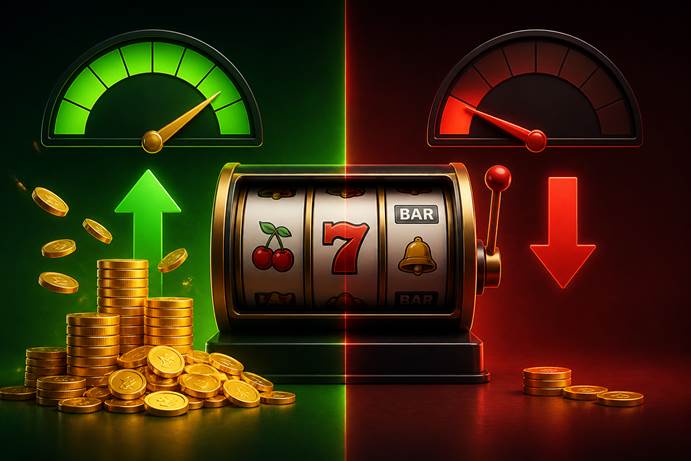
When you first enter an online casino, the return-to-player percentage becomes a crucial factor in determining which slots might align best with your playing style. For additional perspective on these metrics, mino casino de may be useful. This metric, often abbreviated as RTP, provides a theoretical snapshot of how much money a specific game returns to players over a vast number of spins. While the flashing lights and thematic animations capture the immediate attention, the underlying mathematics dictates the long-term flow of funds between the player and the casino. For a new visitor, understanding this distinction is not merely academic; it is a practical step in choosing a game that offers the best statistical chance of a satisfying experience. You can explore specific mathematical models by visiting .

• High RTP slots are generally favored by players who prioritize consistency and want to stretch their bankroll over a longer period

•         These games typically offer a return percentage of 96% or higher, meaning that for every $100 wagered, the game is programmed to pay back approximately $96 over time

•         Choosing the right balance between these two types of slots is a personal decision that depends entirely on your goals

•         Both styles have their place within the diverse ecosystem of a casino, catering to different psychological needs and financial strategies

High RTP slots are generally favored by players who prioritize consistency and want to stretch their bankroll over a longer period. These games typically offer a return percentage of 96% or higher, meaning that for every $100 wagered, the game is programmed to pay back approximately $96 over time. In a competitive online casino, high-RTP titles often serve as the backbone of a player’s strategy because they reduce the volatility of the session. Players who frequent a casino looking for steady, smaller wins will find that high-RTP machines provide a more reliable flow of entertainment value per dollar spent. This approach transforms the act of gambling into a more measured form of risk management.

The Link Between Lower and Games

Conversely, low RTP slots usually present a different proposition, often featuring higher volatility to compensate for the lower percentage of returned funds. These games might only return 90% to 94% of wagers over time, but they are frequently the ones associated with massive jackpots and rare, life-changing payouts. In a busy casino, you will often see high rollers clustered around these machines, chasing the possibility of a massive single hit that offsets the statistical disadvantage. While the math suggests a lower probability of winning, the allure of the jackpot makes these low-RTP games incredibly popular among those willing to risk more for a chance at a larger reward.

Slot Design: Key Considerations

Choosing the right balance between these two types of slots is a personal decision that depends entirely on your goals. A player who visits a casino for an hour of relaxed fun might prefer a high-RTP game to ensure they have enough credits left to enjoy the experience. In contrast, a player with a larger bankroll and a higher tolerance for risk might opt for low-RTP slots, accepting the higher mathematical house edge for the thrill of the potential big win. Both styles have their place within the diverse ecosystem of a casino, catering to different psychological needs and financial strategies.

Area

What to know

Context

High RTP slots are generally favored by players who prioritize consistency and want to stretch their bankroll over a longer period.

Consideration

Conversely, low RTP slots usually present a different proposition, often featuring higher volatility to compensate for the lower percentage of returned funds.

Practical takeaway

Choosing the right balance between these two types of slots is a personal decision that depends entirely on your goals.

Why Player Experience Matters

Ultimately, viewing these percentages as indicators of long-term mathematical design rather than predictive tools transforms how players approach each session at their preferred casino. The most successful players are those who recognize that while the casino always holds the mathematical edge, understanding RTP allows them to minimize that edge over time. By selecting games that match their bankroll and temperament, players can ensure that their time spent at the casino remains a form of entertainment rather than a financial burden.

Canlı Casino Deneyimi: Geleceğin Eğlencesi

Canlı casino etkinlikleri , son senelerde kumarhane sektöründe yenilik yaratmıştır. 2023 yılında, Evolution Gaming, yeni bir canlı oyun tanıtarak sektörün liderliğini sağlamlaştırmıştır. Bu platform, oyunculara gerçek şans oyunları yöneticileriyle oyun oynama fırsatı sunarak, geleneksel kumarhanelerin atmosferini evlere getirmektedir. Evolution Gaming’in CEO’su Martin Carlesund, şirketin çağdaş çözümlerle sektördeki konumunu güçlendirdiğini vurgulamıştır. Martin’in projelerini daha yakından takip etmek için Twitter profilini ziyaret edebilirsiniz.

Canlı oyun oyunları, katılımcılar gerçek zamanlı bağlantı ve sosyal yaşantı sunmaktadır. Oyuncular, krupiyeler ile sohbet edebilir ve diğer oyuncularla etkileşimde yer alabilir. Bu vaziyet, online kumarhanelerin sunduğu deneyimi daha da zenginleştirmektedir. 2024 yılı itibarıyla, canlı casino pazarının 10 milyar dolar aşması beklenmektedir. Bu artış, oyuncuların evlerinden ayrılmadan kumarhane deneyimi yaşamalarına olanak tanımaktadır.

Canlı casino oyunları , genellikle 21, şans oyunu ve baccarat gibi klasik müsabakaları içermektedir. Bu oyunlar, yüksek nitelikli görüntü ve ses ile sunulmakta, oyunculara gerçek bir kumarhane tecrübesi yaşatmaktadır. Ancak, oyuncuların emniyetli ve lisanslı platformları tercih etmeleri önemlidir. Daha fazla veri için Wikipedia bağlantısını ziyaret edebilirsiniz.

Sonuç itibarıyla, canlı casino etkinlikleri, kumarhane sektöründe önemli bir yer. Oyuncular, bu yenilikçi platformlar sayesinde daha çok esneklik ve eğlenceye ulaşmaktadır. Ancak, her zaman dikkatli davranmak ve bütçelerini iyi yönetmek, sorumlu oyun oynamanın önemli bir bölümüdür. Daha fazla veri için matadorbet bahis adresini ziyaret edebilirsiniz.

How Online Casinos Use Automated KYC Technology

Many observers assume that manual review remains the primary method for validating user identities, yet most modern platforms have shifted toward high-speed digital processes to handle registration volume efficiently. For another perspective on this account-related point, casino en ligne france légal may be useful. Instead of relying on teams of administrators to pore over photocopied documents, many now depend on automated KYC technology to authenticate user data in real time. This technical transition is frequently mischaracterized as a reduction in security standards, when in reality, the move serves to minimize the human error that often plagues manual entry. By using machine learning to cross-reference submitted IDs against global databases, operators can achieve a level of consistency that a person working under a high-volume workload simply cannot sustain.

  • When a player uploads a photo of their passport or driver’s license, the software extracts the data points and matches them against reliable government or credit registries
  • A common misconception suggests that these automated systems operate in a vacuum, ignoring the nuanced behavioral patterns associated with different jurisdictions
  • A high-stakes wager or a suspicious withdrawal pattern can trigger a secondary layer of scrutiny that demands additional documentation, such as utility bills or bank statements
  • The algorithm does not simply grant or deny access based on a static checklist; it evaluates the incoming data against a set of dynamic rules that adapt to the shifting security
  • However, automated KYC technology is specifically designed to facilitate encryption and secure data handling that keeps sensitive documentation away from unnecessary human eyes
  • The information is hashed, verified, and stored according to strict protocols, ensuring that the verification step does not inadvertently become a security vulnerability for the participant

Account Access and Use

The core of this system involves optical character recognition and liveness detection, tools that go beyond simple image storage. Automated KYC technology examines the unique features of a government-issued identification card, checking for holographic patterns, specific fonts, and physical anomalies that indicate tampering. When a player uploads a photo of their passport or driver’s license, the software extracts the data points and matches them against reliable government or credit registries. This creates an immediate feedback loop, allowing the platform to flag inconsistencies in seconds. Rather than slowing down the user experience with lengthy waiting periods, these systems approve legitimate accounts almost instantly while isolating potentially fraudulent requests for further scrutiny.

A common misconception suggests that these automated systems operate in a vacuum, ignoring the nuanced behavioral patterns associated with different jurisdictions. In truth, the integration of automated KYC technology allows online casinos to customize their vetting depth based on the specific risk profile of a region or a transaction type. A high-stakes wager or a suspicious withdrawal pattern can trigger a secondary layer of scrutiny that demands additional documentation, such as utility bills or bank statements. The algorithm does not simply grant or deny access based on a static checklist; it evaluates the incoming data against a set of dynamic rules that adapt to the shifting security requirements of the current gaming environment.

Security and Risk

Critics occasionally argue that digital automation prioritizes data collection over player privacy, suggesting that personal information is handled with less care when processed by a machine. However, automated KYC technology is specifically designed to facilitate encryption and secure data handling that keeps sensitive documentation away from unnecessary human eyes. By stripping away manual access to physical document copies, the risk of data leaks stemming from employee misconduct or improper storage is significantly reduced. The information is hashed, verified, and stored according to strict protocols, ensuring that the verification step does not inadvertently become a security vulnerability for the participant.

Metrics and Performance

The effectiveness of this technology relies on the continuous updating of its underlying datasets. As synthetic media and deepfake techniques advance, online casinos must keep their verification engines agile enough to spot sophisticated digital forgeries. This involves testing the software against evolving patterns of identity theft and credential stuffing. The focus remains on accuracy and resilience, ensuring that the barrier to entry for genuine players remains low while the threshold for bad actors becomes increasingly difficult to cross. Ultimately, the industry is not just replacing manual labor but is instead building a more robust defense mechanism that keeps pace with the modern digital climate.

How European Roulette Works in Online Casinos

Understanding how European roulette works in online casinos begins with a single visual cue that many newcomers miss: the wheel carries just one green zero pocket alongside the numbers one through thirty-six. A related resource such as real money slots can help frame the discussion. That lone zero is the quiet architect of every calculation on the table, and it is the detail that separates this variant from its American cousin, which adds a second green pocket and tilts the odds further against the player. Recognizing this difference early helps frame everything that follows, and a quick comparison against a trusted reference such as can confirm whether the layout on your screen matches the rules you expect from a brick-and-mortar venue.

Wheel, Each, and the User Experience

The heart of the experience lies in how the software handles randomness, and here online casinos typically rely on a random number generator that resolves each spin the moment the button is pressed. The result is statistically indistinguishable from a real wheel over time, though some platforms offer live dealer variants where a physical croupier and wheel are streamed to your device. Each approach creates its own rhythm and atmosphere, but neither alters the underlying mathematics of the single-zero wheel, so the choice between them comes down to preference rather than fairness.

  • The result is statistically indistinguishable from a real wheel over time, though some platforms offer live dealer variants where a physical croupier and wheel are streamed to your device
  • Each approach creates its own rhythm and atmosphere, but neither alters the underlying mathematics of the single-zero wheel, so the choice between them comes down to preference rather than
  • The betting grid mirrors the traditional layout exactly, with inside bets covering single numbers or small clusters and outside bets stretching across dozens, columns, colors, and parity
  • No sequence of doubling bets or pattern tracking can overcome the mathematical reality that each spin stands alone and the wheel has no memory

The betting grid mirrors the traditional layout exactly, with inside bets covering single numbers or small clusters and outside bets stretching across dozens, columns, colors, and parity. Payouts remain fixed regardless of stake size, and the interface often adds features like automatic chip placement and history displays that help casual players track recent outcomes. These tools serve entertainment value rather than predictive power, and treating them as anything more than decorative flourish leads to frustration rather than insight.

Overcome, Accepting, and the User Experience

Accepting the built-in house edge as a cost of entertainment rather than a challenge to overcome keeps the experience grounded. No sequence of doubling bets or pattern tracking can overcome the mathematical reality that each spin stands alone and the wheel has no memory. Online play makes this truth easier to recognize by stripping away the distractions of crowds and casino noise, letting attention settle purely on the cadence of betting and spinning without pressure from onlookers.

How Spin Works

The appeal of European roulette in online casinos lies not in systems promising consistent wins but in the clean, fair tension of each spin. The single-zero wheel offers slightly better odds than other variants, and the polished digital presentation delivers the suspense of the original game to any device at any hour. Once the focus shifts from chasing losses to enjoying the measured excitement of the spin itself, the experience settles into something closer to its intended purpose.

How Credit Card Payments Work at Online Casinos

The familiar idea of “paying by card” suggests a direct transfer from the cardholder to the casino. That impression is misleading. A credit card payment is a set of messages exchanged among several businesses, followed by the movement of money through banking channels. The casino account balance, the card authorization, and the final settlement are related events, but they are not the same thing. Understanding those distinctions explains why a payment can appear successful yet remain pending, why a withdrawal may use another route, and why an issuer can refuse an otherwise valid transaction.

After a card is selected, its details are normally sent through an encrypted payment page or converted into a token that replaces the underlying card number. The casino, or its payment provider, then submits an authorization request containing the amount, currency, merchant identity, and transaction data. This request travels through a payment processor and acquiring bank to the relevant card network, which routes it to the issuing bank. The issuer checks the available credit, account status, billing information, legal restrictions, and automated risk signals. Its approval reserves part of the cardholder’s credit line; it does not immediately transfer that amount to the casino.

Approval is another point at which assumptions can cause confusion. An authorized transaction is a promise that the issuer will honor the charge if the merchant completes the process correctly. The merchant must later capture and settle the transaction, usually by submitting approved authorizations in a batch. Settlement moves funds through the card network, with fees and interchange costs deducted before the acquiring bank credits the merchant. Depending on the operator’s systems, casino funds may become visible before settlement finishes. A rejected or delayed settlement can therefore create a discrepancy between a card statement and the casino ledger, although legitimate operators normally reconcile such cases through their payment records.

The route is often simplified as a single line connecting the customer, bank, card network, and merchant, as in , but that shorthand conceals several separate responsibilities. Processors handle technical transmission, acquirers sponsor the merchant within the card system, networks set routing and operating rules, and issuers decide whether to approve individual charges. For additional context, sweet-bonanza can be considered alongside this overview. These roles may be combined by large financial firms, yet each function still exists. The merchant category code is particularly relevant because gambling transactions may receive different treatment from ordinary retail purchases, including issuer blocks, additional authentication, or cash-advance classification.

A decline does not necessarily mean the casino rejected the customer or detected wrongdoing. The issuer may be applying a policy on gambling-related purchases, responding to an exhausted credit limit, questioning an unusual location, or requesting stronger authentication. Many transactions use a system such as 3-D Secure, which can require a one-time code or confirmation through the issuer’s banking service. Successful authentication confirms that the person completing the transaction likely controls the card or associated device; it does not guarantee that the purchase is affordable, that the merchant is reputable, or that the issuer will accept every later charge.

Deposits and withdrawals also operate differently. A card deposit begins as an authorization and may end as a purchase or cash-advance-like transaction, depending on how the issuer classifies it. A withdrawal is not simply the original message sent backward. Some card systems permit refunds to the same card, often limited to the amount previously paid, while other payouts require a bank transfer or another supported method. Consequently, a pending casino withdrawal does not create a pending credit-card transaction. Its timing depends on the operator’s verification and processing procedures, while any eventual refund or payout follows separate financial rails.

Disputes are frequently mistaken for instant cancellations. Cardholders may challenge a genuinely unauthorized charge, but a chargeback is not designed to recover ordinary gambling losses or undo a purchase merely because its outcome was unfavorable. The issuer reviews the claim, the merchant can submit evidence such as account records and authentication results, and the card network may become involved if the parties disagree. Reversing a completed charge can also conflict with the casino’s terms and may lead to account restrictions. Fees, interest, currency conversion, and cash-advance treatment can further complicate the final cost. Recognizing the difference between authorization, settlement, merchant credit, payout, and dispute makes the system easier to assess without mistaking convenience for a direct or risk-free transfer.

Contrasting Ledger Architectures for Gaming Financial Systems

Deploying distributed ledger networks to manage funds for online entertainment platforms involves weighing structural contrasts among competing protocols. Traditional banking channels rely on centralized intermediaries, whereas decentralized networks operate on distributed consensus mechanisms. Operators examining this space frequently contrast legacy proof-of-work chains with newer proof-of-stake alternatives. Each model presents distinct implications for throughput, finality duration, and economic sustainability.

High-throughput networks facilitate rapid settlement times and minimal fees, making them attractive for microtransactions. Conversely, older, more established chains prioritize censorship resistance and deep cryptographic security over speed. When developers review structural trade-offs, they often rely on documentation provided by to understand how different consensus rules influence congestion patterns. High traffic volumes on certain platforms can trigger steep gas spikes, altering the cost predictability required for efficient payment routing.

Another major point of divergence lies in finality mechanics. Probabilistic finality systems carry a small window of vulnerability where a transaction might theoretically be reversed if an alternative chain branch grows longer. Deterministic finality approaches eliminate this uncertainty by requiring validators to reach immediate consensus on block validity. For financial ledgers supporting gaming platforms, deterministic finality offers stronger assurances against double-spending attempts, reducing the fraud risks associated with rapid asset transfers. For additional context, online casino ohne oasis sperre can be considered alongside this overview.

Interoperability features also shape architectural decisions. Bridges and cross-chain messaging protocols allow assets to move between disparate ecosystems, yet these bridges frequently introduce additional attack vectors. Native asset issuance on multi-asset ledgers simplifies accounting procedures compared to wrapped tokens that depend on external custodianship. Operators must weigh the convenience of broader token acceptance against the heightened security auditing requirements mandated by complex multi-chain architectures.

Regulatory considerations further complicate infrastructural alignment. Transparent public ledgers permit third-party auditors to verify transaction histories and trace funds, addressing certain anti-money laundering compliance requirements. However, complete transparency conflicts with consumer expectations regarding financial privacy. Privacy-focused protocols obscure transaction details, but this opacity can prevent platforms from meeting statutory reporting mandates in tightly regulated jurisdictions.

Ultimately, selecting an appropriate ledger depends on matching network capabilities with operational priorities. Whether an enterprise values absolute decentralization over processing speed or prioritizes low operational overhead above all else, understanding these technical trade-offs remains essential. A balanced infrastructure design prevents structural bottlenecks from disrupting user engagement, ensuring that financial transfers operate reliably within the bounds of prevailing technical and regulatory frameworks.

How Online Casinos Translate Games and Interfaces

Expanding digital platforms into new linguistic regions requires careful planning, which is why many industry operators explore resources like to coordinate international software releases. For another perspective on this account-related point, nouveau casino en ligne may be useful. When an online casino prepares to enter a foreign territory, developers must carefully transform every part of the user journey. Translating games and interfaces demands a blend of technical precision and cultural awareness. A direct word-for-word conversion rarely succeeds because gambling terminology, visual layouts, and player expectations vary dramatically across borders.

The visual framework of an online casino poses a primary challenge for localization teams. Languages expand and contract depending on their grammatical structures. German text often requires significantly more horizontal space than English, whereas Chinese characters display densely within smaller dimensions. Interfaces must adjust dynamically so buttons, menus, and account dashboards do not break or truncate. Developers build flexible cascading style sheets and responsive grids early in the design cycle to accommodate these dimensional shifts without forcing radical layout redesigns for every targeted market.

Key Considerations

Beyond screen layout, the specific wording used inside games requires deep subject-matter knowledge. A standard slot title might feature intricate thematic wording, puns, or regional idioms that carry zero meaning if translated literally. Localization specialists rewrite these terms to match the colloquial expectations of local players while preserving the underlying mathematical structure and payout rules. The integrity of the gameplay must remain intact, meaning wagering prompts, rules pages, and paytables require extreme accuracy to avoid player confusion or regulatory penalties.

Area What to know
Context The visual framework of an online casino poses a primary challenge for localization teams.
Consideration Beyond screen layout, the specific wording used inside games requires deep subject-matter knowledge.
Practical takeaway Currency formats, numerical displays, and date structures also need careful adjustment during the translation process.

Currency formats, numerical displays, and date structures also need careful adjustment during the translation process. Different territories use distinct separators for thousands and decimals, and displaying an incorrect format on a betting interface can lead to costly mistakes. Furthermore, payment gateway integrations must reflect the preferred financial nomenclature of the target region. Operators must ensure that deposit buttons, bonus terms, and withdrawal instructions read naturally to avoid eroding player trust at critical financial moments.

  • Beyond screen layout, the specific wording used inside games requires deep subject-matter knowledge
  • Localization specialists rewrite these terms to match the colloquial expectations of local players while preserving the underlying mathematical structure and payout rules
  • Currency formats, numerical displays, and date structures also need careful adjustment during the translation process
  • Furthermore, payment gateway integrations must reflect the preferred financial nomenclature of the target region

Metrics and Performance

Maintaining long-term consistency across thousands of text strings requires specialized terminology databases and collaborative software pipelines. As online casinos continually update their libraries with new software titles, localization teams rely on centralized glossaries to ensure that terms like scatter, stake, or jackpot remain uniform. This rigorous approach prevents conflicting instructions from appearing across different sections of the same platform.

Tools and Practical Use

Looking ahead, the methods used to localize betting platforms will continue to balance automated efficiency with human editorial oversight. While machine translation tools accelerate initial text processing, native speakers remain essential for verifying tone, regulatory compliance, and cultural nuance. By treating linguistic adaptation as an ongoing commitment rather than a static project, operators can maintain clear communication with diverse player bases for years to come.

The Rise of Mobile Gaming in the Casino Industry

Mobile gaming has become a notable trend in the casino industry, permitting players to enjoy their beloved games anytime and anywhere. According to a 2023 study by Newzoo, mobile gaming earnings is anticipated to overcome $100 billion, representing for nearly 50% of the global gaming market. This shift is largely driven by the increasing use of smartphones and tablets.

One notable company in this space is DraftKings, which has effectively combined mobile gaming into its platform. Their app features a wide selection of casino games, including slots, blackjack, and roulette, all designed for mobile platforms. You can find out more about their products on their official website.

In 2022, the World Series of Poker (WSOP) unveiled a mobile app that allows players to take part in tournaments and cash matches from their smartphones. This innovation has made poker more reachable, captivating a new wave of players. For further information into the effect of mobile gaming on the casino industry, visit The New York Times.

As mobile tech continues to progress, characteristics such as augmented virtuality (AR) and virtual virtuality (VR) are projected to boost the gaming encounter even more. These tools will allow players to engage themselves in a more dynamic environment, making mobile gaming even more attractive. Explore a service that highlights these innovations at мостбет.

While mobile gaming offers comfort and flexibility, players should ensure they are using certified and governed apps. This guarantees fair play and protects personal information, permitting for a secure and pleasant gaming experience.