
A currency pair sold by a trader implies an expectation of price decline, which occurs when the base currency loses strength against the quoted currency. An expectation of price increase exists when a trader purchases a currency pair — indicating that the base currency is gaining value compared to the quoted currency. In forex trading, one evaluates the amount of the quoted currency (found to the right of the /) required to acquire a single unit of the base currency (located to the left of the /). A forex pair consists of the base currency and the quoted currency, such as EUR/USD.
So your profits and losses can be far greater than the amount you put down to open the trade, and your losses can sometimes even exceed your initial deposit. Risk management tools like stop-loss and take-profit orders are key to protecting your capital. Get the latest forex market trading hours on our forex trading hours page. Unlike stock markets, which operate on a set schedule, forex trading hours follow the global financial hubs, allowing traders to buy and sell currencies at any time within the trading week.
In this guide — we’ll break things down to help you get a solid first grasp of forex trading. It’s important to know that forex trading isn’t just about buying and selling currencies without aim or reason. While leverage can enhance potential gains (it also increases the risk of losses), making it crucial to implement risk management strategies such as stop-loss orders and proper position sizing. With iFOREX’s enhanced trading tools, traders can quickly spot patterns, although market volatility continues to be elevated due to global economic changes.
Forex markets react to releases of key economic data, as they give a picture of how the country’s economy is performing and check forex broker licence UAE how it compares with other countries. Smart investors can profit from forex trading — but since it is a very volatile market, the potential for losses is also very high. But another market that significantly overshadows them when it comes to volume is the foreign exchange market, which trades trillions of dollars worldwide every day. Yes — forex trading is legal in many countries, provided you trade through a broker authorised by the relevant financial regulator. Once you understand the basics of forex trading, you can open a Pepperstone CFD account and start speculating on the price movements of currency pairs. Explore expert predictions (technical analysis), and key factors driving gold prices.
Spreads from 0.0 pips? That’s smart
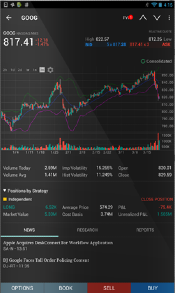
Trading in the forex market entails the simultaneous buying of one currency and selling of another, as these two currencies are exchanged as a pair. The forex market is utilized by investors (traders), and institutions for hedging and speculation through the exchange of one country’s currency for another, allowing them to capitalize on price fluctuations between pairs. Your initial investment amount is influenced by your financial condition, encompassing your total capital and risk appetite. For instance (if you decide to risk $1,000), you may establish a limit to exit your position upon achieving a gain of $2,000. As an example, if you choose to risk your entire investment, you might seek an exotic currency pair that exhibits greater volatility and, consequently, higher potential rewards.
These involve emerging market currencies and can be more volatile, with wider spreads. These include the most traded currencies globally (such as EUR/USD), GBP/USD and USD/JPY. It is a decentralised (over-the-counter (OTC) market), meaning there is no single exchange where all transactions take place. The forex market operates differently from traditional stock exchanges. Forex trading — also known as foreign exchange trading, is the process of exchanging one currency for another in the hope of making a profit from price movements. Learn how the forex markets work, the currency pairs available and the risk involved.
These bands fluctuate, widening during periods of high volatility and narrowing when volatility is low. The RSI functions as a momentum oscillator that assesses both the rate and alteration of price changes. Traders utilize technical indicators to evaluate market trends and predict potential price fluctuations. A forex chart provides a visual depiction of the price fluctuations of a currency pair over a designated timeframe.
No-leverage forex trading is a term describing this trading method, as it involves trading FX pairs without the use of leverage. Major banks hold the highest position in the hierarchy of the forex market’s structure. Unlike other markets, the forex market stands out due to its decentralized nature and lack of a principal exchange. With a daily trading volume surpassing $7.5 trillion, the forex market is recognized as the largest financial market globally.
For example (if the usage of cotton is rising worldwide), then the economies of countries that are major cotton producers can be expected to benefit, and the relative value of their currency may be expected to increase. Throughout most trading days, various economic reports from different countries in the world are released. There are two basic strategic approaches to forex trading – fundamental and technical. A wide daily trading range (with equal opportunities to profit from both buying and selling), makes the forex market very attractive to speculators in general and day traders in particular. This daily volatility makes for significant opportunities to realize profits simply within the range of price fluctuations that occur within a normal trading day.

The forex market trades fluctuations in the exchange rate between currency pairs (such as the euro and the US dollar), which is stated as EUR/USD. This group includes a disparate cast of characters, from professional investment fund managers to individual small investors, who come to the market with widely varying levels of skill, knowledge, and resources. Last, but certainly not least, are individual forex traders, speculators who trade the forex market seeking investment profits. Central bank interventions in the forex market are similar to policy-driven central bank interventions in the bond market. Governments, through their central banks, are also major players in the forex market. They also serve as market makers in forex trading and trade heavily in their own accounts.
Currencies of countries that export large volumes of commodities (such as the Australian dollar), New Zealand dollar and Canadian dollar, are often referred to as commodity currencies. The cost of commodities can impact currencies depending on whether the countries involved are net importers or net exporters. As the global reserve currency (the US dollar is considered a safe haven), which increases its value during times of macroeconomic uncertainty and political instability. Forex rates fluctuate constantly, based on patterns of demand between the two currencies in a pair. You open a short CFD position on GBP/USD worth 100,000 of the base currency, in this case £100,000. After conducting some fundamental analysis on the market, this time you think it will fall.
Volatility offers an advantage in forex trading — as selling short is as accessible as buying long. Corporations leverage the forex market to protect their primary business operations in international markets. Multinational corporations are significantly engaged in forex trading, with annual transactions reaching hundreds of billions of dollars. If a banker warns you against forex trading, it might be worthwhile to inquire why their bank invests substantial amounts in the forex market if it is deemed a poor investment. This scenario indicates a high level of leverage, which can lead to substantial returns but also amplify losses, even with minor price fluctuations. Explore these articles for a more comprehensive insight into the nature of forex trading.